

Hey there! I'm a supplier of Green Artificial Turf Grass, and today I wanna chat about a hot topic in the artificial turf world: Does green artificial turf grass require infill?
Let's start by understanding what infill is. Infill is a material that's added to artificial turf. It's usually made of rubber granules, sand, or a combination of both. The main idea behind adding infill is to mimic the feel and performance of natural grass. It helps the turf fibers stand up straight, provides better stability, and even adds some shock absorption.
Now, the big question: Does our green artificial turf grass really need it? Well, it depends on a few factors.
When Infill is a Good Idea
For high - traffic areas: If you're installing our Yard Artificial Grass in a yard where kids play football all day or pets run around like crazy, infill can be a game - changer. The infill keeps the turf fibers upright, so they don't get flattened easily. Without infill, the turf might start to look messy and uneven after a short period of heavy use.
Enhancing durability: Infill acts like a shield for the turf fibers. It reduces the wear and tear caused by constant friction. When people or animals walk on the turf, the infill absorbs some of the impact, protecting the fibers from breaking down quickly. So, if you want your artificial turf to last a long time, especially in areas with a lot of activity, adding infill is a smart move.
Improving performance: In sports fields, for example, infill can improve the ball's bounce and roll. It provides a more consistent playing surface, which is crucial for a fair game. Our Garden Mark Artificial Turf can greatly benefit from infill in a backyard sports setup.
Temperature regulation: Infill can also help with temperature control. On hot days, it can absorb some of the heat, reducing the surface temperature of the artificial turf. This makes it more comfortable to walk or play on, especially if you have sensitive feet or paws running around on it.
When You Might Skip the Infill
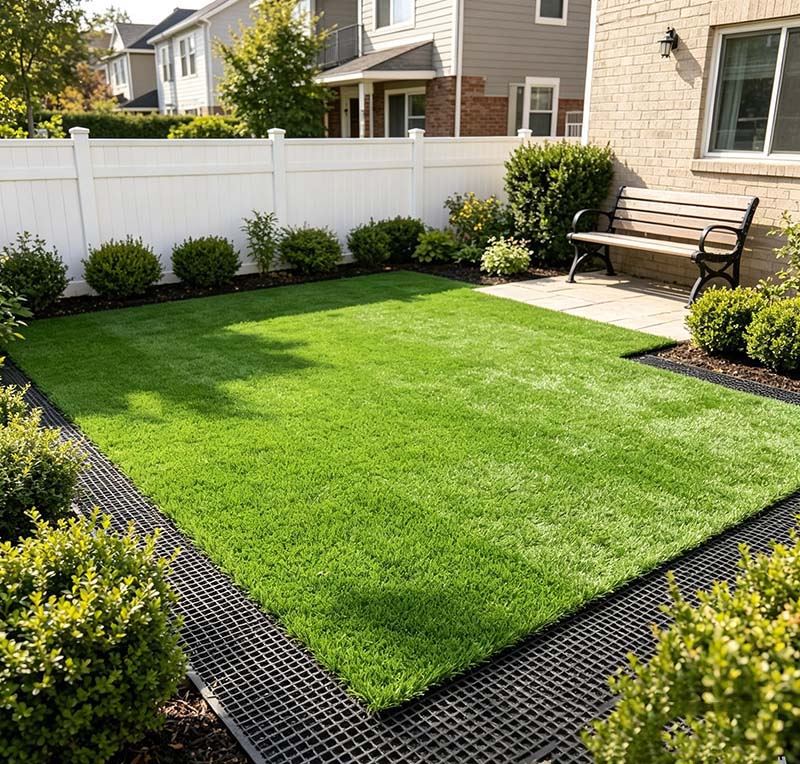
For low - traffic areas: If you're using our Private Garden Artificial Turf in a small, private garden where there's not much foot traffic, you might not need infill. Maybe it's just a quiet spot for you to sit and read a book. In this case, the turf can still look great without the added weight and maintenance of infill.
Aesthetic preferences: Some people just prefer the look of a non - infilled turf. It can have a more natural, fluffy appearance right after installation. If aesthetics are your top priority, and you're not too worried about long - term durability or performance, you can choose to go without infill.
Types of Infill
If you decide that infill is right for your green artificial turf grass, there are a few types to choose from.
Sand infill: Sand is a classic choice. It's inexpensive, widely available, and heavy enough to keep the turf fibers in place. It also provides good drainage, which is important to prevent waterlogging. However, sand can be a bit dusty, especially when it's dry, and it might need to be replenished over time.
Rubber infill: Made from recycled tires, rubber infill offers excellent shock absorption. It's a great option for sports fields or areas where there's a lot of jumping and running. But it can get hot in the sun, and there have been some concerns about the environmental impact and potential health risks associated with rubber particles.
Organic infill: This is a more eco - friendly option. It can be made from materials like cork or coconut husks. Organic infill is biodegradable and doesn't pose the same environmental concerns as rubber. However, it might not be as durable as other types of infill and may need more frequent replacement.
Installation and Maintenance of Infill
If you do decide to use infill, it's important to get the installation right. The amount of infill you need depends on the type of turf and its intended use. Too little infill won't provide the desired benefits, while too much can make the turf feel stiff and uncomfortable.
Maintenance is also key. Over time, the infill can shift and compact, especially in high - traffic areas. You might need to rake it regularly to keep it evenly distributed. And if you notice that some areas are running low on infill, you'll need to add more to maintain the turf's performance.
Conclusion
So, does green artificial turf grass require infill? There's no one - size - fits - all answer. It boils down to your specific needs, the location of the turf, and your personal preferences. If you're looking for a long - lasting, high - performance surface for a busy area, infill is probably a good idea. But if it's a low - traffic, aesthetic - focused space, you might be able to skip it.
If you're still not sure whether infill is right for your project, or if you have any questions about our Green Artificial Turf Grass and other products like Private Garden Artificial Lawn, don't hesitate to reach out. We're here to help you make the best decision for your space. Let's start a conversation and see how we can transform your outdoor area with our top - quality artificial turf!

References
- "Artificial Turf: A Comprehensive Guide", Turf Industry Journal
- "Infill Materials for Artificial Turf: Properties and Applications", Sports Surface Research Institute